Vitamin C for Skin: An Honest Guide to What It Can and Can't Do
By BootsCare Editorial 18 October 2026 · 7 min read
Frequently asked questions
Can I use vitamin C every day?
Most vitamin C products are designed for daily use, and reviews describe vitamin C as having an excellent safety profile. Patch test first, follow the directions on the pack, and start gently if your skin is sensitive.
Should I use it in the morning or the evening?
Follow the pack. A product sold as a day cream is meant for the morning. Whenever you use vitamin C, it does not replace sunscreen during the day.
Is tingling normal?
Some people notice a mild tingle, and very high strengths of pure vitamin C are more likely to irritate. If your skin becomes red, itchy or swollen, wash the product off, stop using it and seek advice.
Will vitamin C lighten my skin tone?
The research looks at dark patches and uneven tone, such as melasma and age spots, not at changing natural skin colour. Expect a more even complexion in your own tone, not a different one.
Can I take vitamin C tablets instead?
A varied diet with plenty of fruit and vegetables is linked with healthier skin. However, only a small fraction of oral vitamin C reaches the skin, and supplements seem to raise skin levels only in people whose levels were low to begin with. Topical products target the skin directly.
How long before I see a difference?
Think in months. The clinical studies on vitamin C and skin ran for between about three and six months, so give a product consistent use, alongside daily sunscreen, before judging it.
This article is for general information and is not medical advice. Patch test new products, and speak to a doctor or dermatologist about persistent skin concerns.
Get new guides in your inbox
Clear, sourced skincare advice from BootsCare. No spam.
Vitamin C is one of the most familiar names in skincare, and one of the most over-promised. It appears in serums, day creams and cleansers, usually next to words like glow and radiance. This guide sets out what the research actually shows: what vitamin C does in skin, what it can realistically change, how to read the label and how to use it well.
Where the evidence is strong, we say so. Where it is thin, we say that too.
Key takeaways
Vitamin C is the most abundant antioxidant in human skin, and skin needs it to build stable collagen.
On the skin, it can help with uneven tone and dark spots by slowing melanin production. The change is gradual, over months.
It works alongside sunscreen, never instead of it.
The form on the label matters. Pure ascorbic acid is the best studied; derivatives are more stable but less proven.
The research is promising but still limited, so be wary of dramatic promises.
What vitamin C does in your skin
Vitamin C is the most abundant antioxidant in human skin. Unlike many animals, people cannot make their own, so it has to come from food or from what we apply to the skin. Its two best-understood jobs are these:
Antioxidant protection. Sun, pollution and smoke create unstable molecules called free radicals, which damage skin cells and the collagen beneath them. Vitamin C neutralises them. It also regenerates vitamin E, another antioxidant in the skin, so the two work as a team.
Collagen. Collagen is the protein that gives skin its strength. The enzymes that build and stabilise it need vitamin C to work, and the skin cells that make collagen depend on it completely.
Studies have found lower levels of vitamin C in older and sun-damaged skin. Researchers do not yet know whether that is a cause of the damage or a result of it.
What it can realistically do
Uneven tone and dark spots
Vitamin C interferes with tyrosinase, the enzyme that drives the production of melanin, the skin's pigment. Less new melanin means dark spots can gradually fade, which is why vitamin C appears in so many brightening products. In one clinical study of melasma, pigmentation decreased significantly after 16 weeks of use. The same review is careful to add that vitamin C may not work as well as hydroquinone, a stronger treatment dermatologists use for pigmentation.
Fine lines and texture
Two small controlled studies, one with 10 people over 12 weeks and one with 20 people over six months, found improvements in sun-aged skin with topical vitamin C. Another major review is more cautious. It describes the overall evidence on wrinkles as less than convincing, partly because many studies test mixtures of ingredients, and because a cream moisturises the skin whatever it contains.
Reading the label: the forms of vitamin C
Vitamin C is a fragile molecule. In its pure form it is unstable and struggles to pass the skin's outer barrier, so formulators either acidify pure vitamin C carefully or use more stable versions called derivatives. On an ingredients list, look for these names:
Name on the label
What it is
What the research says
Ascorbic Acid
Pure vitamin C (L-ascorbic acid)
The most active and best-studied form, but unstable. It needs a low pH to get into the skin.
Ascorbyl Palmitate
Vitamin C joined to a fatty acid
Designed to help delivery into the skin. It is not necessarily more stable, and it is unclear how well skin converts it to active vitamin C.
There is no single best form yet. More stable does not automatically mean more effective, because a derivative also has to reach the skin and be converted into active vitamin C. The ingredients list on each pack tells you which form a product uses.
Vitamin C and sunscreen work as a pair
Sunscreen's job is to block or reduce the UV that reaches your skin. Vitamin C protects in a different way: as an antioxidant, it helps deal with the free radicals that UV creates, which sunscreens only partly prevent. One does not replace the other. The research also suggests vitamin C works best in partnership with vitamin E.
Whatever else is in your routine, daytime sunscreen comes first. Our sunscreen guides, linked below, explain how to choose and apply it.
How to start using vitamin C
Patch test first. The American Academy of Dermatology advises applying a new product to a small test spot twice a day for seven to ten days before using it more widely.
Follow the directions on the pack. They tell you how often and at which point in your routine to apply it.
Start gently. If your skin is sensitive, begin with once a day and see how it responds.
Finish with sunscreen during the day.
Introduce one new product at a time, so you can tell what your skin is responding to.
Store it well. Vitamin C is unstable, so keep the lid closed and the product out of direct sunlight and heat, as the pack instructs.
Be patient. The studies above ran for three to six months. Judge results over months, not days.
Choosing a vitamin C product
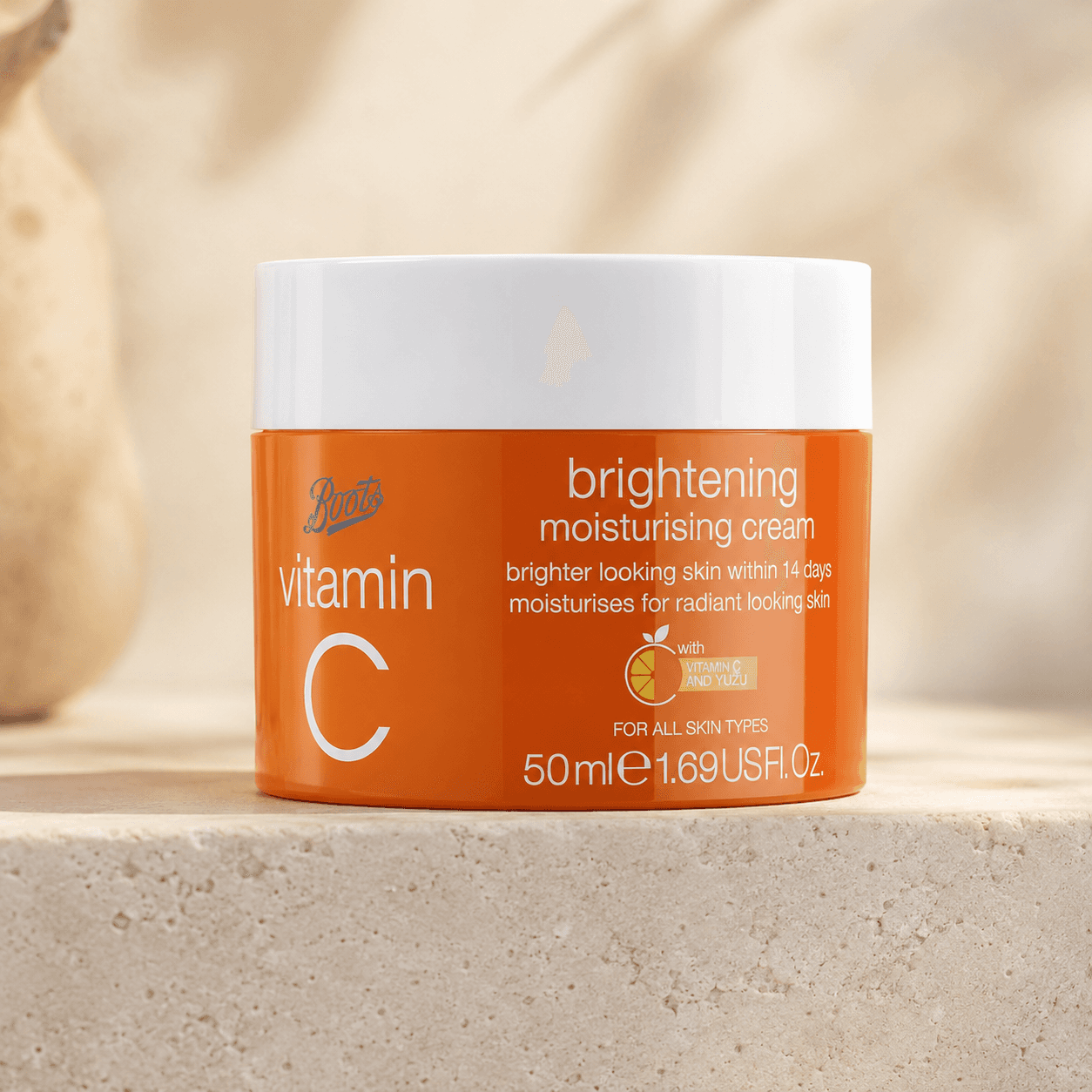
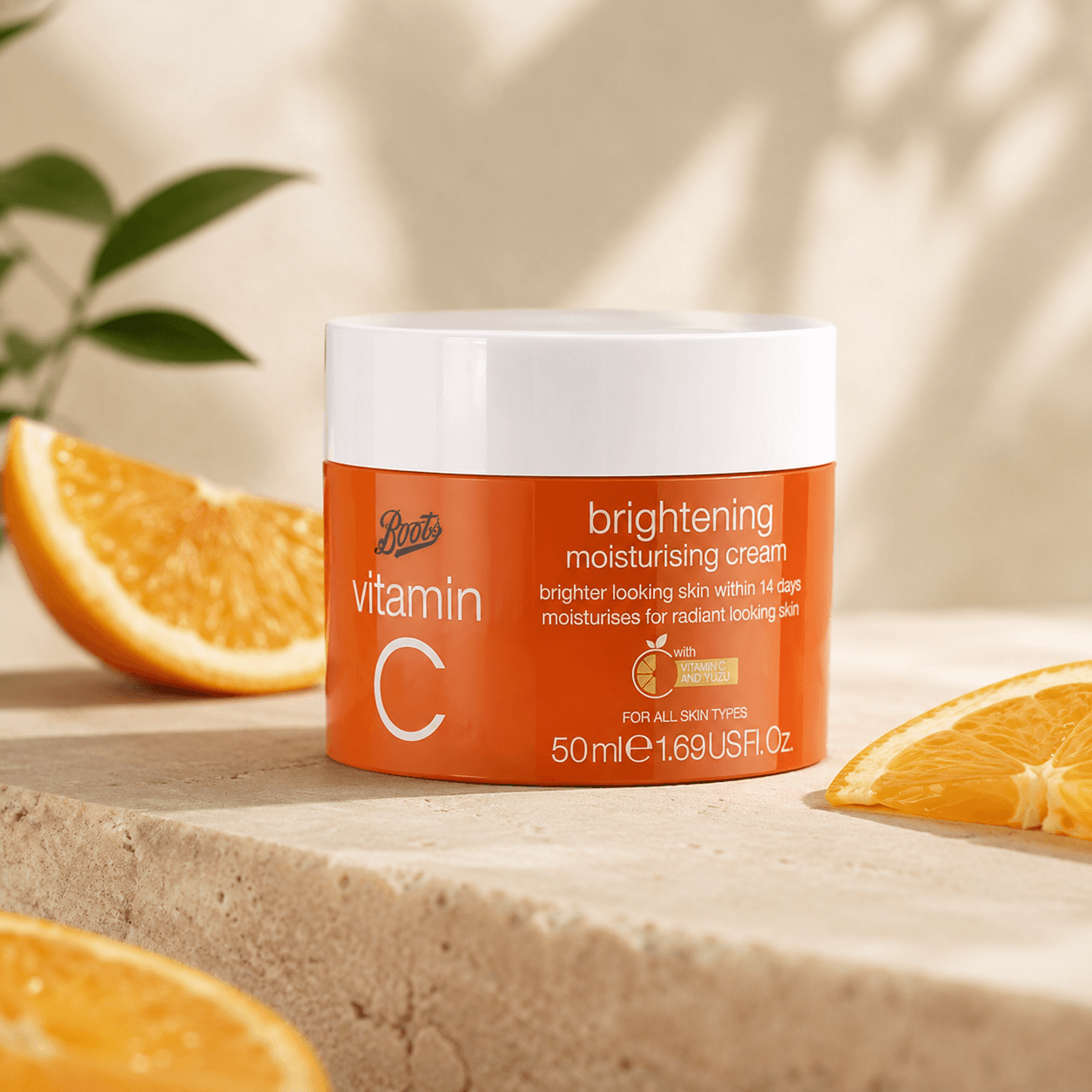
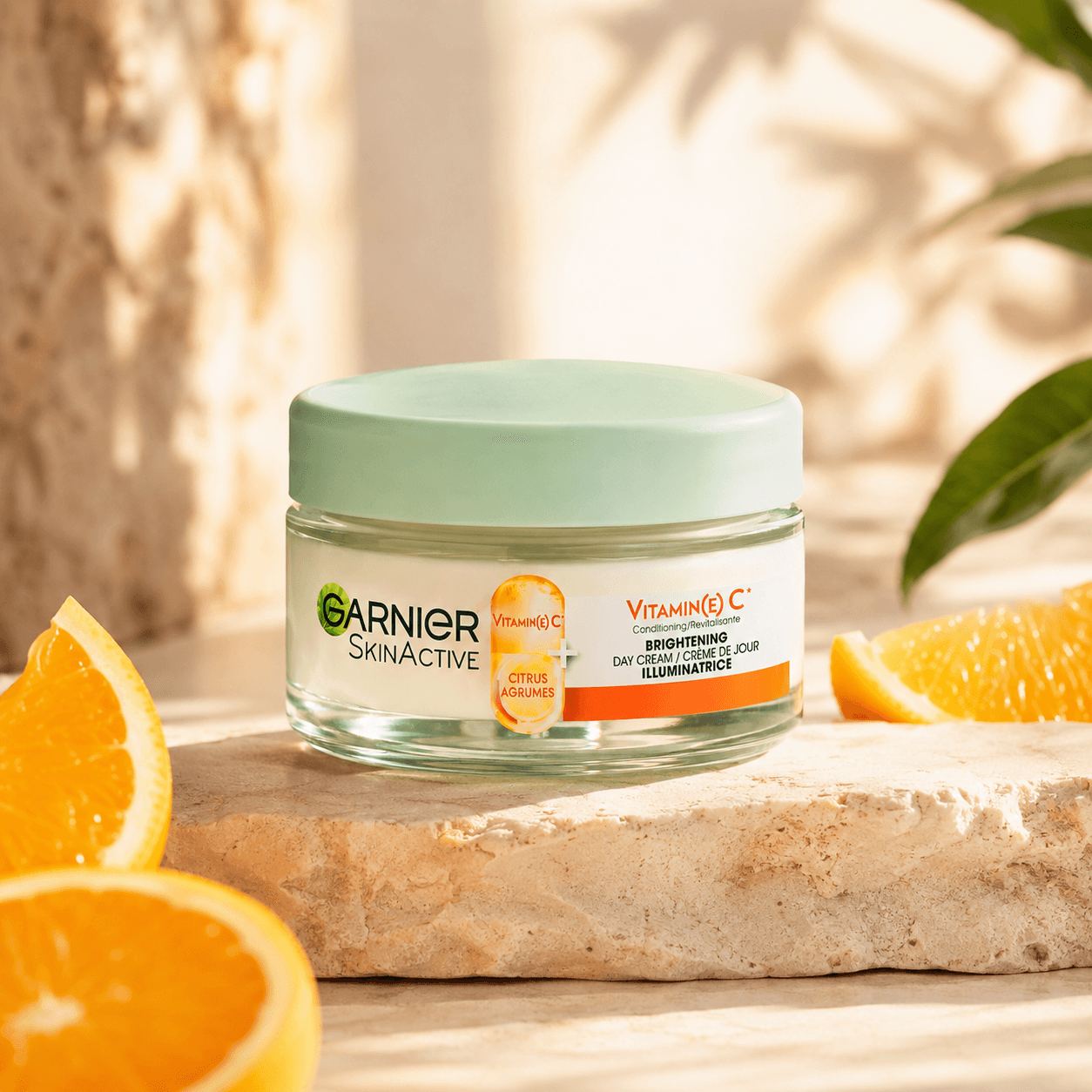
Format. A vitamin C day cream combines the active with moisturising in one step. A serum is a lighter layer that goes on before moisturiser. The best choice is the one you will use consistently.
Skin type. Very high strengths of pure vitamin C are more likely to irritate, so sensitive skin is better off starting gently.
Packaging. Because vitamin C breaks down easily, packaging that limits light and air is a sensible sign.
Authenticity. An active ingredient is only as good as the product it comes in. Buy from a source you trust.
Vitamin C earns its place in a routine: it is the skin's own leading antioxidant, it is essential for collagen, and it can gradually even out tone. Use it consistently, pair it with sunscreen and keep your expectations realistic.